
Maneuvering & Ride Control
Bow Thrusters & Stabilizers
Docking made safe, controlled and comfortable, whatever the conditions. A ride that turns a rough, seasick day into a comfortable one. Thrusters and stabilizers, specified and fitted in-house by the area’s only certified ABT‑TRAC and WESMAR installation yard.
95%
Roll reduction published by Seakeeper for a correctly sized gyro
70%
Underway pitch, roll and yaw taken out by Seakeeper Ride
A thruster or stabilizer retrofit is three trades at once: composite or metal work to open and reinforce the hull, hydraulics to drive the system, and the engineering to tie it into the boat’s power. We do all three in house, without subcontracting the hard part.
Two jobs
Docking, and the ride
A thruster makes docking safe and controlled. A stabilizer makes the ride comfortable. They are different systems, and specifying the right one for your boat before you spend the money is most of the value we add.
The ride — underway
Fin stabilizers
Hydraulically driven fins each side of the hull generating lift against roll. ABT‑TRAC reads roll and heel from solid-state inertial sensors and adjusts fin angle of attack over 200 times a second.
The ride — underway and at anchor
Gyro stabilizers
A flywheel inside the boat producing a righting moment. No appendages, no drag penalty, and the only system that controls roll at anchor. Seakeeper publish up to 95% roll reduction and have now done over 4,000 refits, so retrofitting is routine rather than experimental.
The ride — underway
Seakeeper Ride
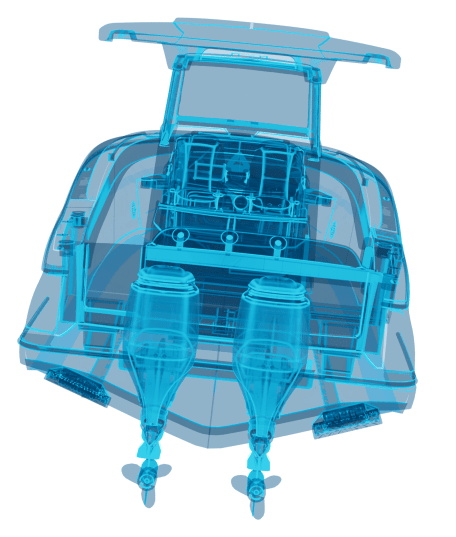
A Vessel Attitude Control System: controllers mounted each side of the transom below the waterline deploy rotary blades that create lift at the stern, taking out up to 70% of underway pitch, roll and yaw. The answer to a boat that pounds, bow-steers or fishtails.
Thrusters — docking
Docking, safe and controlled
We sell the highest-quality thrusters there are: low-maintenance, powerful and reliable, so docking is safe, controlled and comfortable whatever the conditions.
- Wind or current. Thrust that holds the bow, and the stern where the boat needs it, against the conditions.
- A tight fairway or slip. Proportional control: as much push as the moment needs, not all or nothing.
- A thruster you can count on. ABT‑TRAC and WESMAR, built heavy, with oversized gears and bearings and a rotating seal guard protecting the shaft seals.
- Low maintenance. Low-maintenance units, fitted and serviced by factory-certified ABT‑TRAC and WESMAR installers.
- More push. WESMAR’s dual counter-rotating props deliver up to 40% more thrust than a comparable single prop.
- The hull opening. Tunnel, reinforcement and refinish are done by our own composites crew, in the same yard.
Stabilizers — the ride
From a rough day to a comfortable one
A stabilizer improves the whole ride, not just the roll. It turns a seasick, rough and uncomfortable day on the water into a safe, comfortable and enjoyable one.
- Underway. WESMAR and ABT‑TRAC fins, a Seakeeper gyro, or Seakeeper Ride.
- At anchor or on a mooring. A Seakeeper gyro, the only system that controls roll at anchor.
- Nothing below the waterline. A gyro, with no appendages and no drag penalty.
- Weight in the right place. A gyro is a few hundred to a few thousand pounds going somewhere structural. The composite work that carries it is done in-house.
Certified installers
ABT‑TRAC and WESMAR
Our installers are factory-certified by both. They have been through ABT‑TRAC and WESMAR training on the thrusters, the fin stabilizers and the hydraulics that drive them, and that certification is what lets us open a hull, put the system in and commission it here rather than sending the boat somewhere else.
One hydraulic system, several jobs
Most TRAC thrusters run off a TRAC integrated hydraulic system — and that same system can drive the stabilizers, windlass, capstan, cranes or bilge pumps. On a boat already carrying hydraulics for the fins, putting the thrusters on it is usually cheaper and more reliable than a second electrical install.
Seakeeper Ride
100 adjustments a second
Trim tabs hold whatever angle you last set them to. By the time a wave has arrived, the tab is still trimmed for where the boat was a moment ago. Ride is reacting continuously instead.
- Up to 70% reduction in underway pitch, roll and yaw
The unit
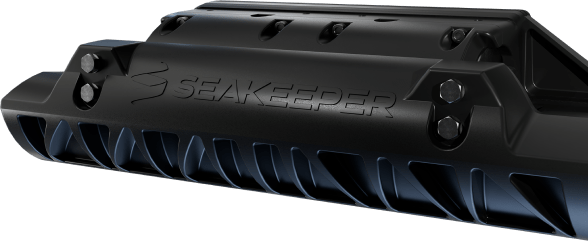
One controller each side of the transom, below the waterline, drivetrain fully sealed
Where it mounts
Bolted to the transom either side of the drives — no cockpit space lost
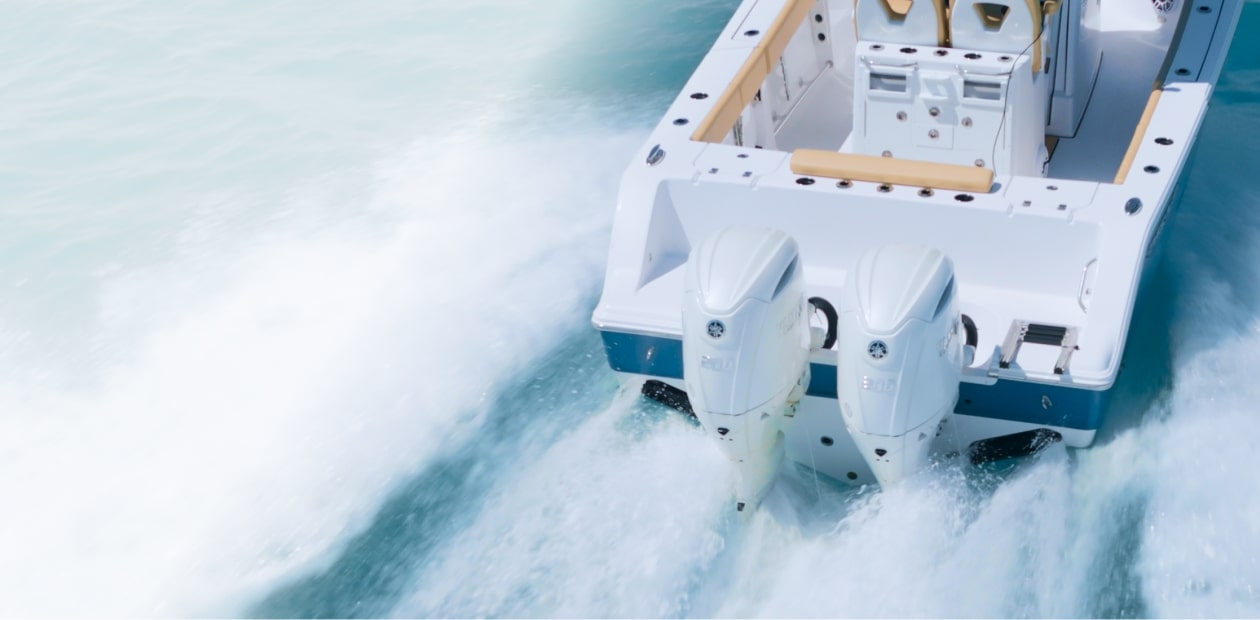
Blades deployed
Rotary blades extend at up to 300 mm a second, 100 adjustments every second
Quoted, every time
What moves the number
Two boats of the same length can be a long way apart. This is what we are looking at when we quote, so you can read ours and anyone else’s with the same eye.
- The system. Thruster, stabilizer, or both, and which type suits how the boat is used.
- Size and displacement. Sizing runs on displacement as much as length.
- Hull material and location. Where the tunnel, fins or gyro go, and what the structure needs around them.
- Power. Electric or hydraulic, and whether the boat already carries hydraulics.
- Reinforcement and refinish. What has to be opened, reinforced and refinished afterwards.
We quote from the boat, not from the phone.
Contact us today for an estimate
A low-maintenance thruster that makes docking safe and comfortable, and a stabilizer that makes any day on the water fun and comfortable, whatever the weather. You get an estimate within 48 working hours, and a firm quote once we have seen the boat.
Having the bottom done while the boat is out? Instant estimate.
Free for every customer
A complimentary 18-point inspection
An expert technician tests the boat’s systems and writes up every point as Excellent, Good, Monitor, Attention or Critical — a written report telling you what is sound, what to keep an eye on, and what has to be dealt with before it goes back in the water. Free with every job.
EXCELLENT
GOOD
MONITOR
ATTENTION
CRITICAL

