
Paint & finish
Topside & Deck Refinishing
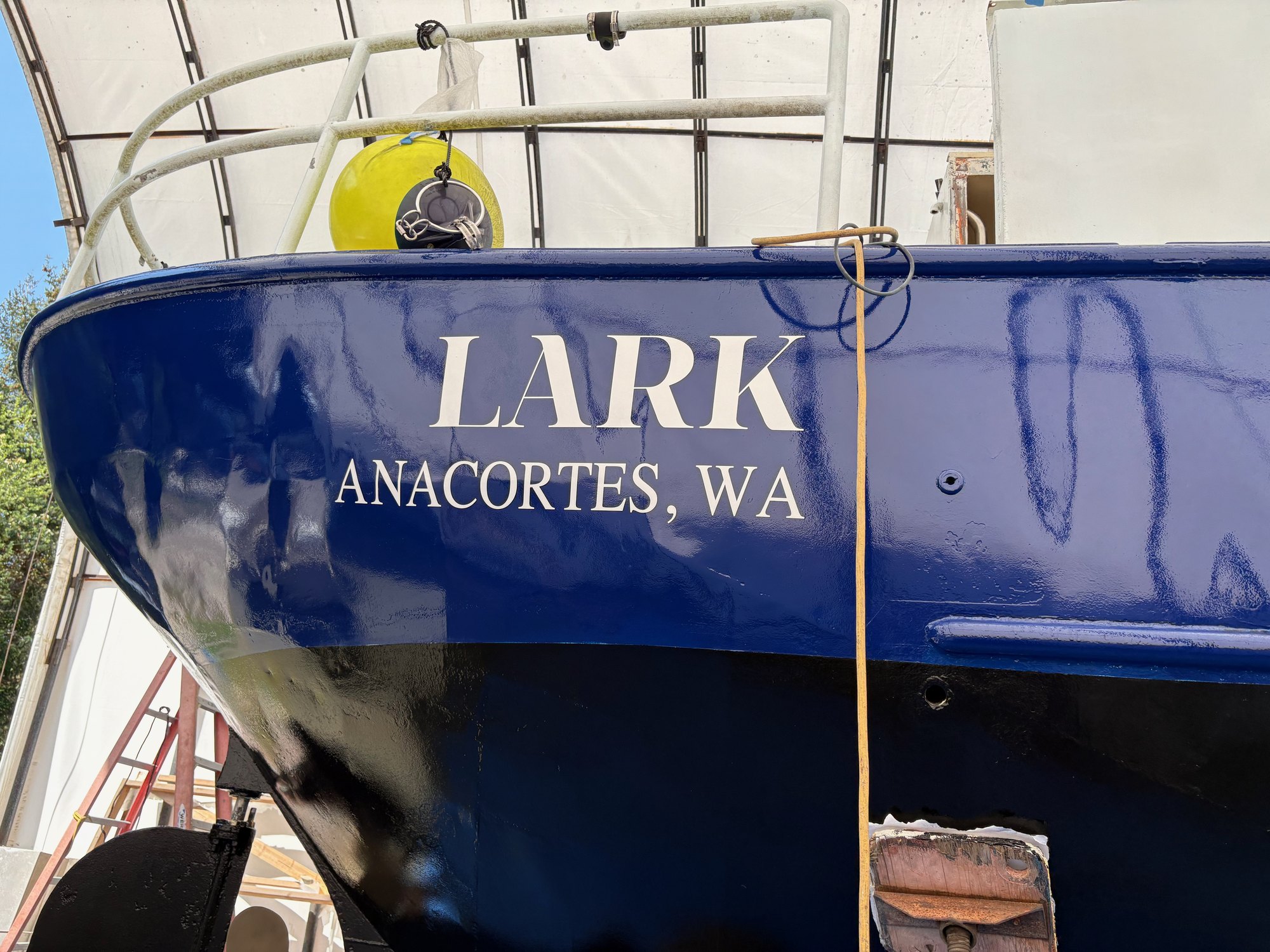
Boats leave this booth better than they were built
It still runs, and everything works. But the gloss went flat somewhere in the last few seasons, the boot stripe has gone ragged, and from the dock the boat reads as one that is getting on. That is fixable, and it is fixable to better than the day it was built.
What you are actually buying
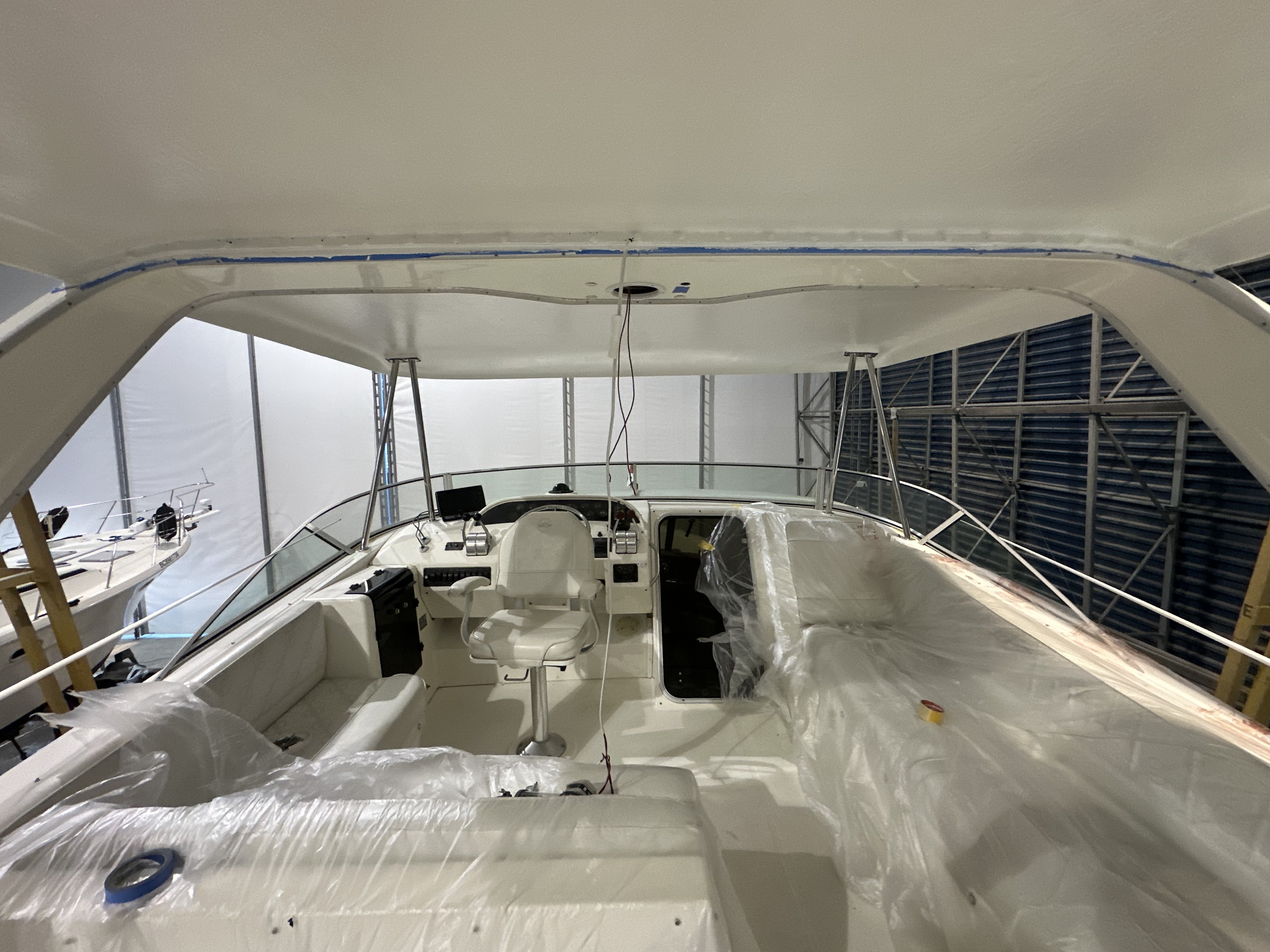
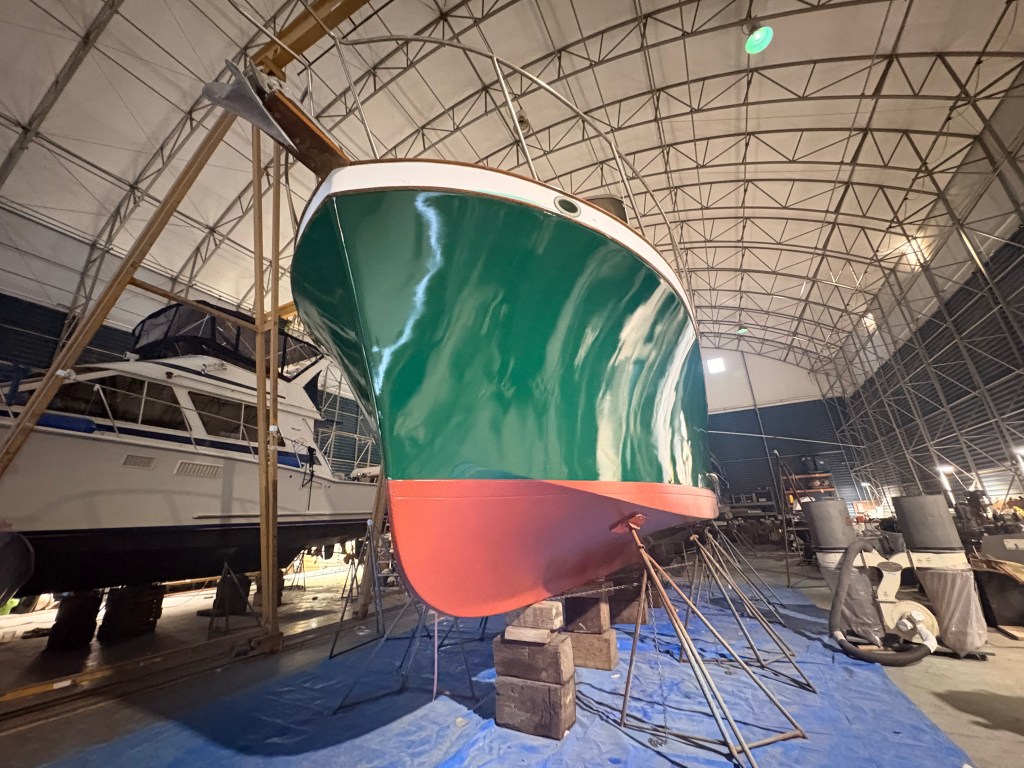
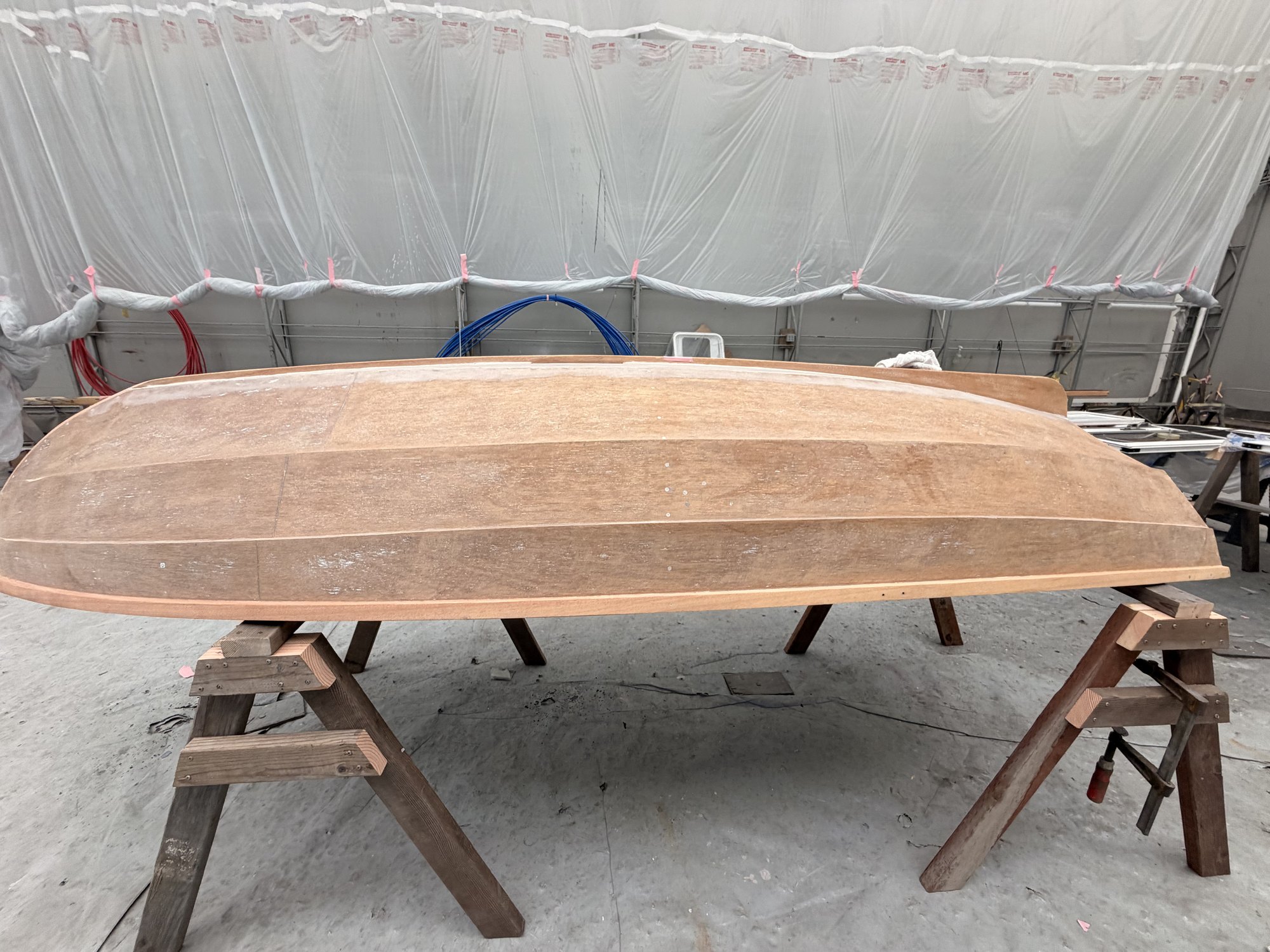
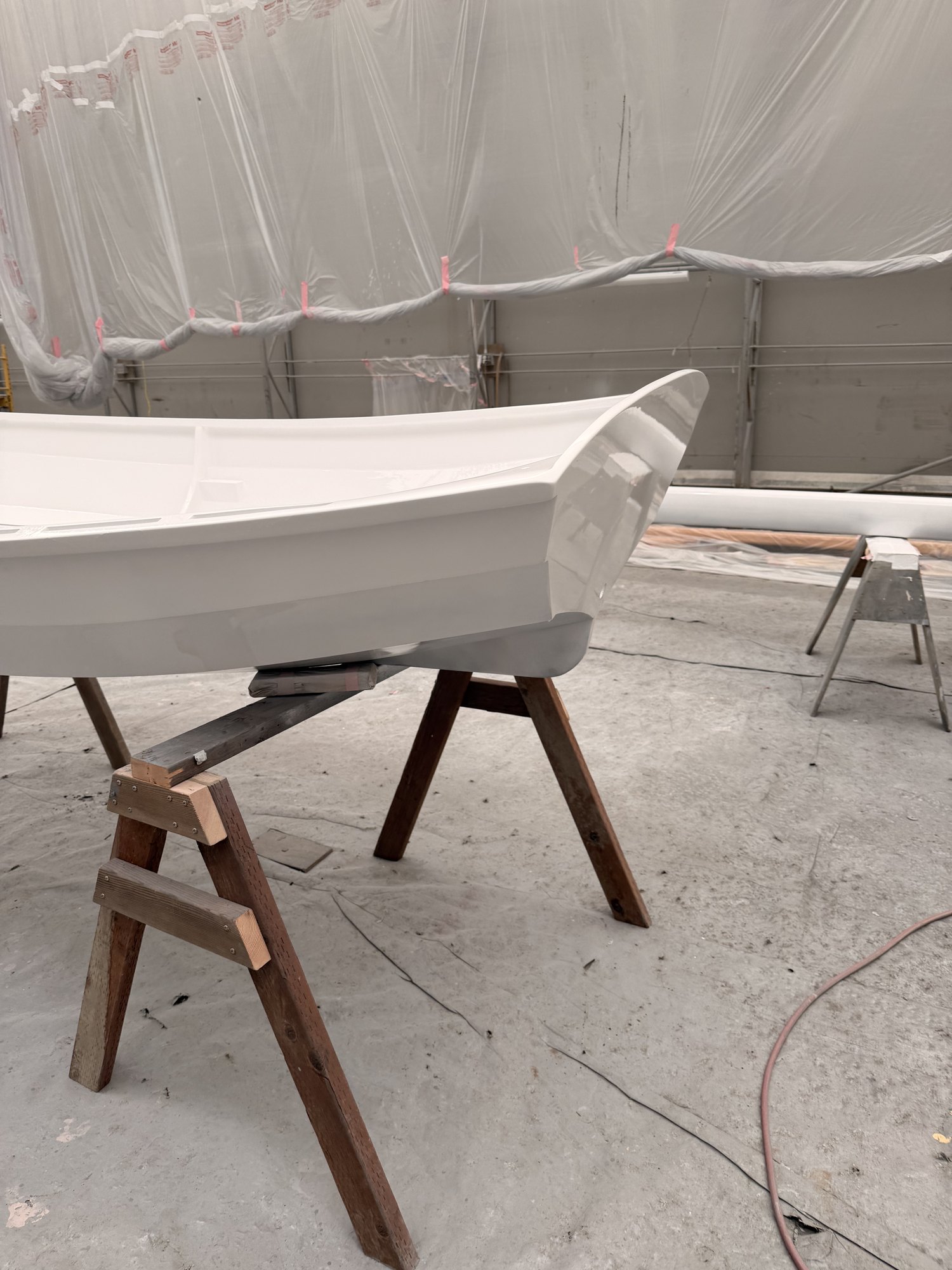
Not paint. A surface. The gloss in these photographs is built before any paint is sprayed, and fairing is the trade inside the trade — the hull is read by eye and by hand and long-boarded until the reflection running down it is straight. That judgment is the whole difference between two hulls sprayed out of the same can, it shows from forty feet away on the water, and it is the one part of the job nobody can add afterwards. It is also where the hours go, which is the honest reason two numbers for the same boat are not two prices for the same job.
It happens in a climate-controlled spray booth: 120 feet, under cover, indoors, with dust, temperature and humidity held to specification from the first coat to full cure.
Paint or new gelcoat
A hull can be refinished three ways: cut, polish and seal the gelcoat that is there, spray new gelcoat, or paint. Cutting and sealing keeps the original finish. When the choice is new gelcoat or paint, paint is the better option on every count an owner weighs:
- Cost. New gelcoat sprayed onto a finished hull cures poorly in open air and orange-peels, so the whole boat has to be wet-sanded up through the grits and machine-buffed before it shows a gloss. Paint goes on at a fraction of the thickness, and Awlgrip sprays to a high gloss with no buffing. Less labor is why paint is usually the less expensive way to bring a hull back.
- Durability. A two-part polyurethane cures to a tightly cross-linked film that is less porous and more stain-resistant than gelcoat, which grows more porous with age.
- Longevity. Polyurethane resists UV and holds its color and gloss far longer. Gelcoat oxidizes and chalks in the sun.
- Repair. Awlcraft 2000 repairs blend into the coat beneath them when wet-sanded. A gelcoat patch is difficult to color-match.
Gelcoat does its best work in the mold. It is sprayed in as the first layer of a new boat and goes on twenty-odd mils thick, so the imperfections of a fresh molding can be sanded and buffed out of it. On a painted hull, our crew does that job with Awlgrip 545 epoxy primer: the sandable build layer, faired by eye and by hand until the reflection runs straight, under a topcoat that does the protecting.
We do gelcoat work, and where gelcoat is the right answer we will say so. For a topside that has to look right for years, we recommend paint, sprayed in our 120-foot climate-controlled booth.
Awlgrip or Awlcraft
We spray both, and they are not interchangeable. Awlgrip is the harder, more chemically resistant finish and it holds gloss longer — the finish that stays looking new the longest. Awlcraft 2000 is more forgiving: it can be buffed and spot-repaired, which matters on a working boat that will inevitably meet a dock.
Which one suits you depends on how the boat is used and how you feel about the first scratch. We will give you a straight recommendation on which one suits the boat.
Both are easy to keep: dirt, grime and grease struggle to stick to them. Awlgrip needs only soap, fresh water and a soft cloth, never wax or polish. Awlcraft 2000 can be buffed, polished and waxed, which is what makes it so forgiving. Awlgrip’s own care guide.
Metal hulls
Steel and aluminum take the same finishes as everything else in this shop, Awlgrip included. A metal hull does not have to look like a workboat.
Decks and nonskid
All of it: re-molded pattern nonskid taken from the original, nonskid additive in the coating, Treadmaster, and KiwiGrip. Deck work is where a refinish is judged, and it is where we spend the time to get the pattern and the grip right.
Brightwork and varnish
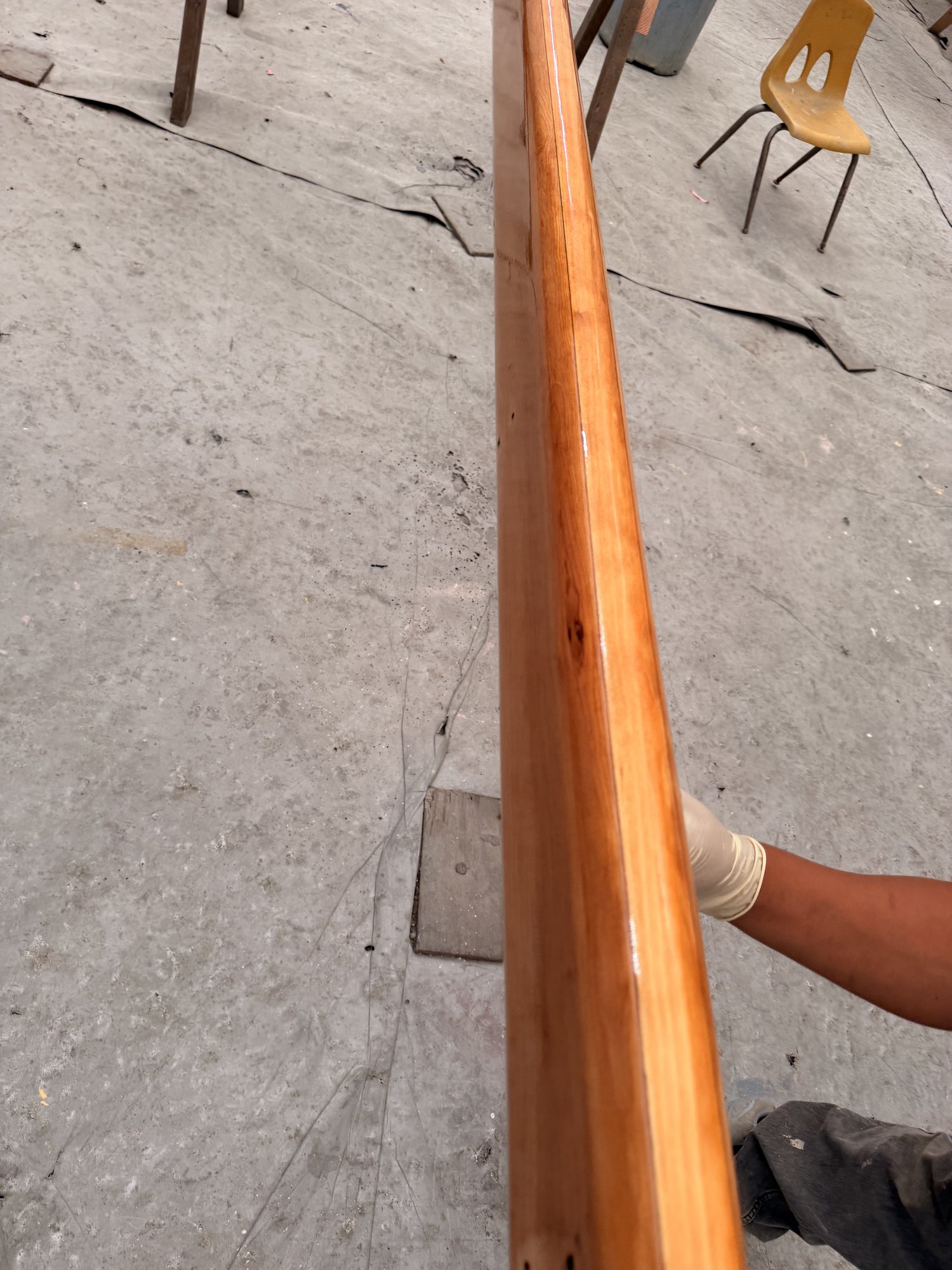
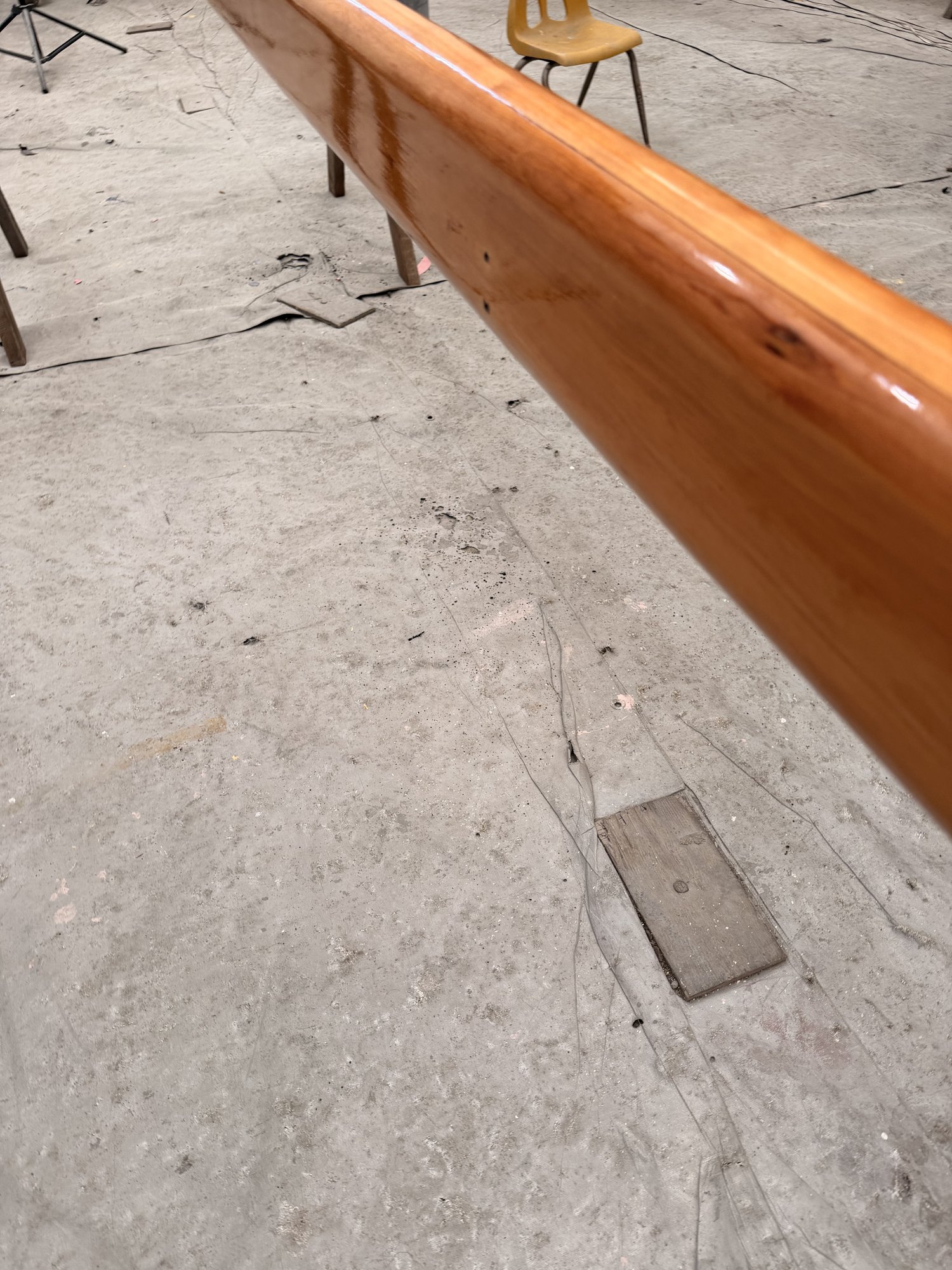
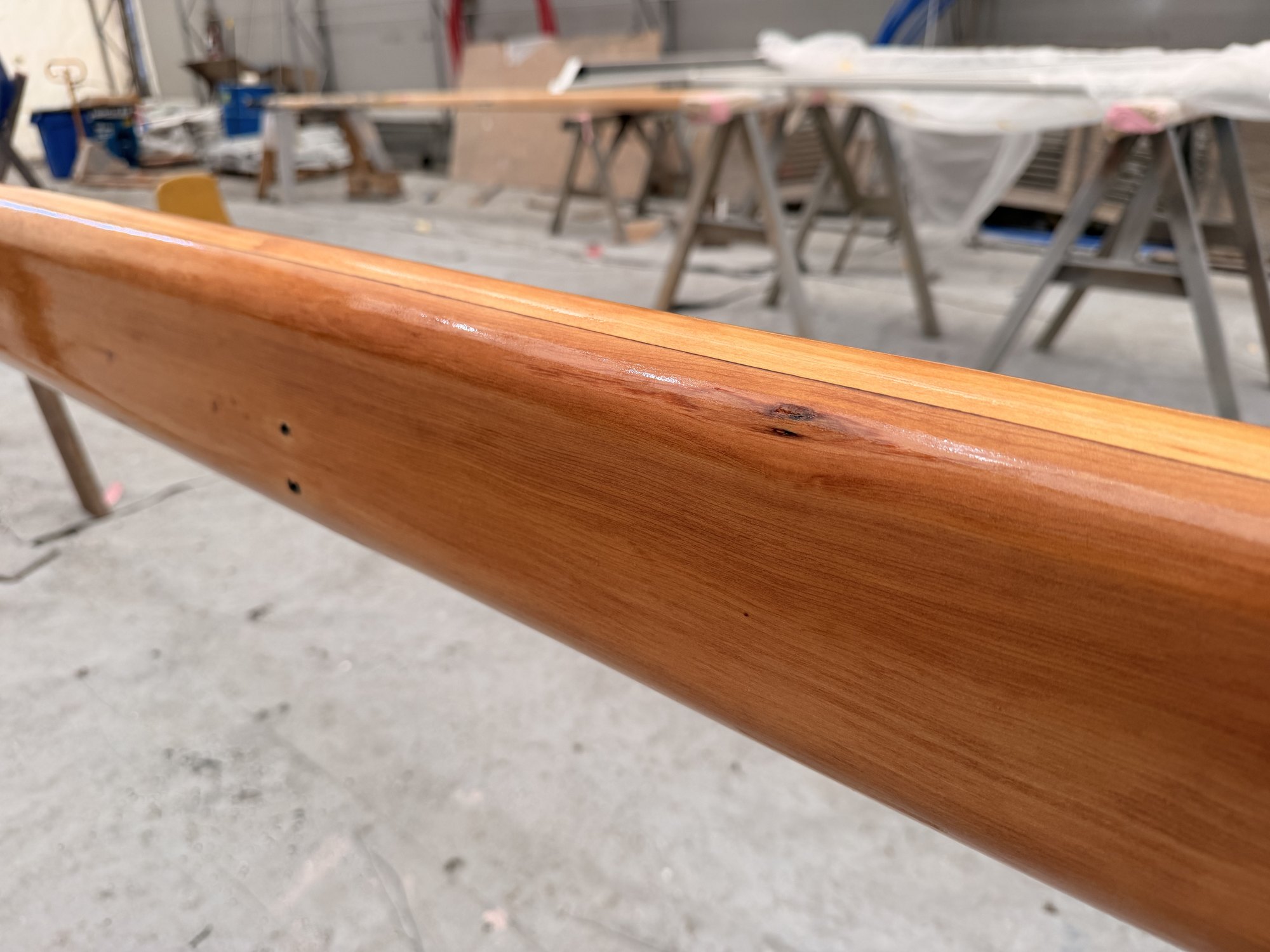
We do a lot of work in Awlwood, which outlasts traditional varnish by a wide margin and keeps its clarity rather than going amber and lifting. Traditional varnish where a customer wants it; Awlwood where they want to stop revarnishing every season.
Spar repair
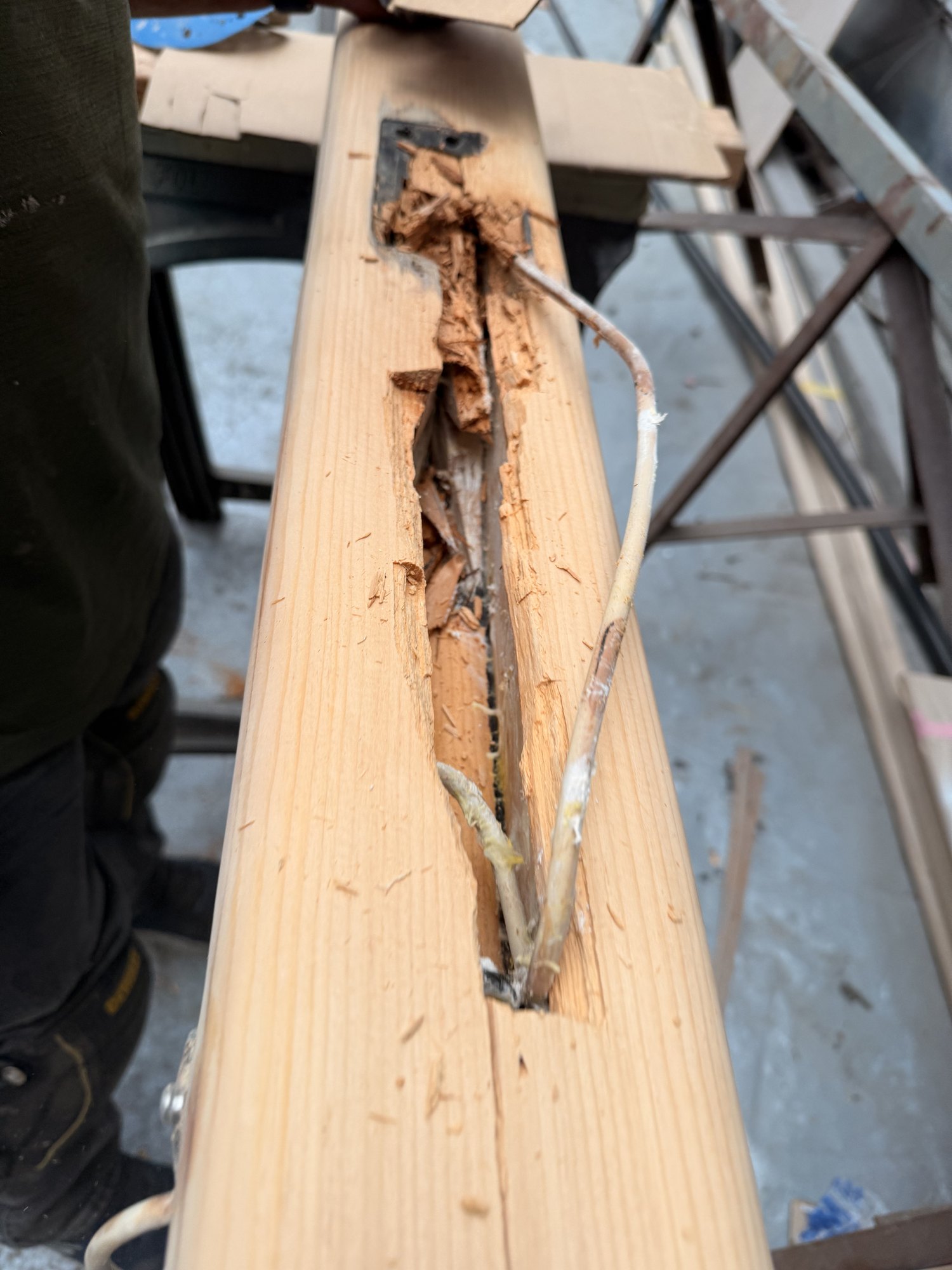
Rot in a spar does not mean buying a new one. Cut back to sound timber, rebuilt, faired and refinished.
The hands on your boat
We employ the top hands in the trade and they arrive with decades behind them. Then we send them to school twice — through ESI University, our own proprietary program, and through the manufacturers’ product classes for the systems they spray.
The decades are what read a hull. A long-board is guided by eye and by hand, and no datasheet supplies that judgment. The certification is what holds the system to exactly what its maker specifies: wet film thickness measured to specification, every coat.
Certified GlideCoat Pro applicator, working to written manufacturer standards.
One job, start to finish
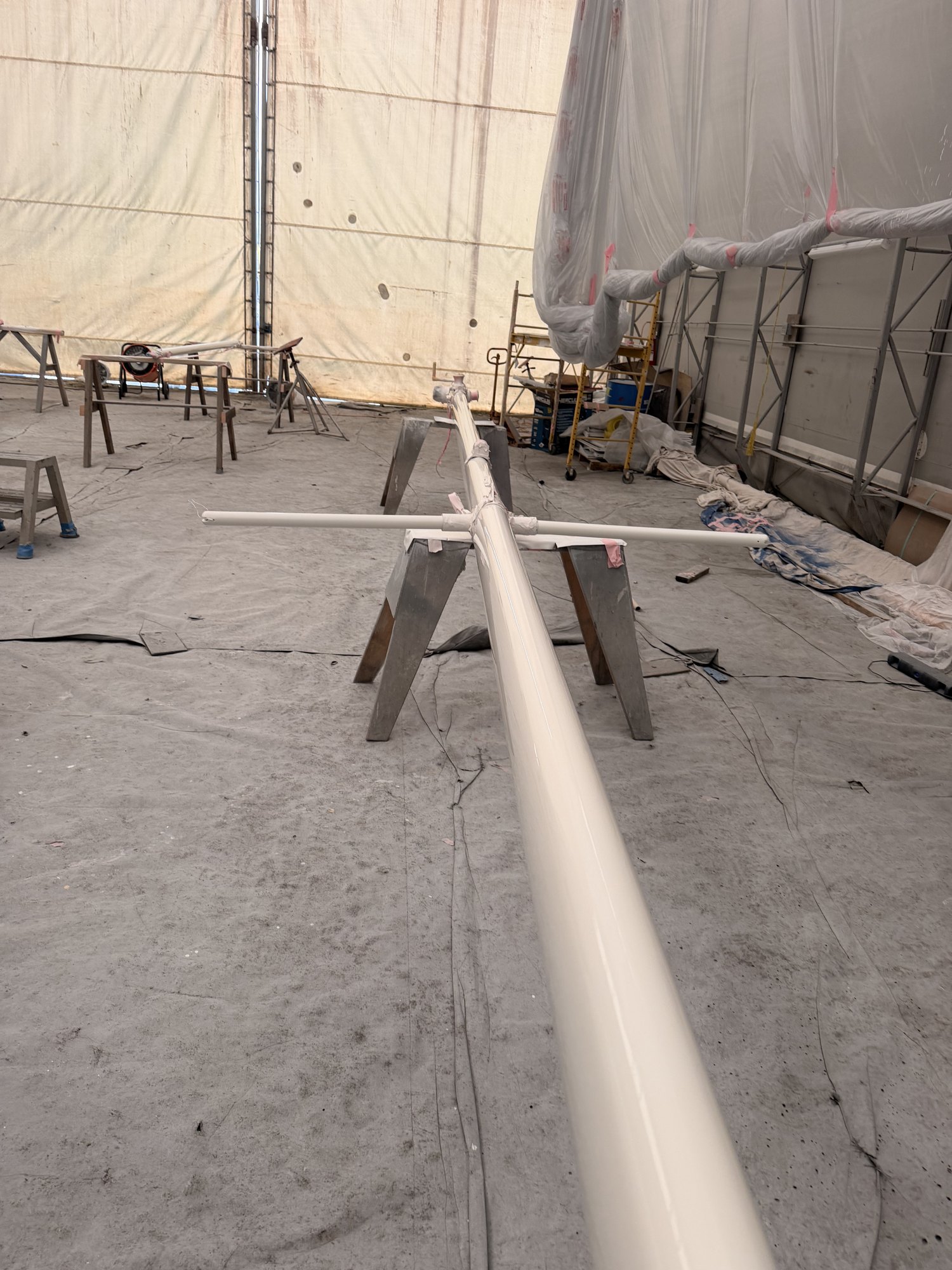
Faired, primed, then sprayed
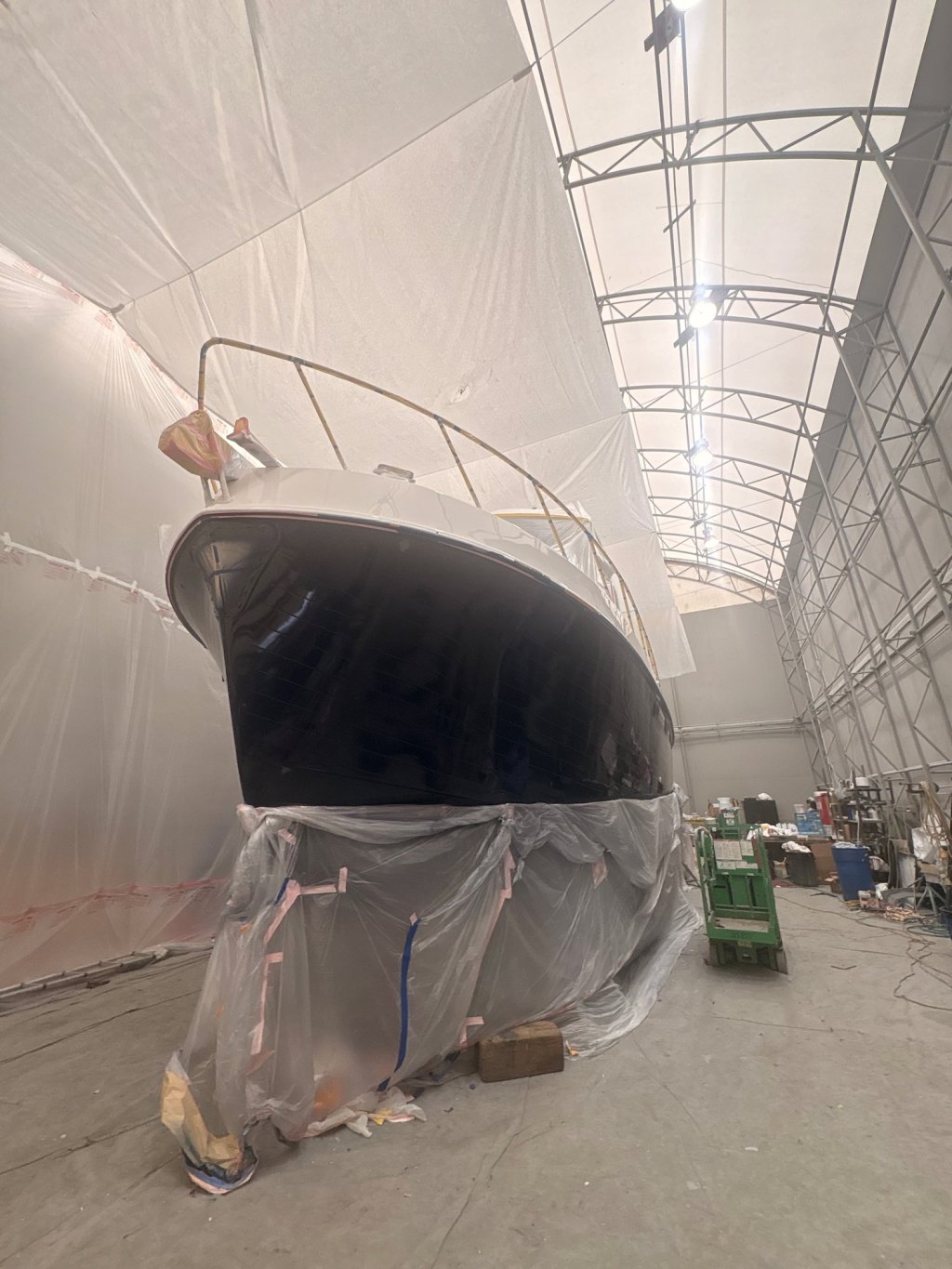
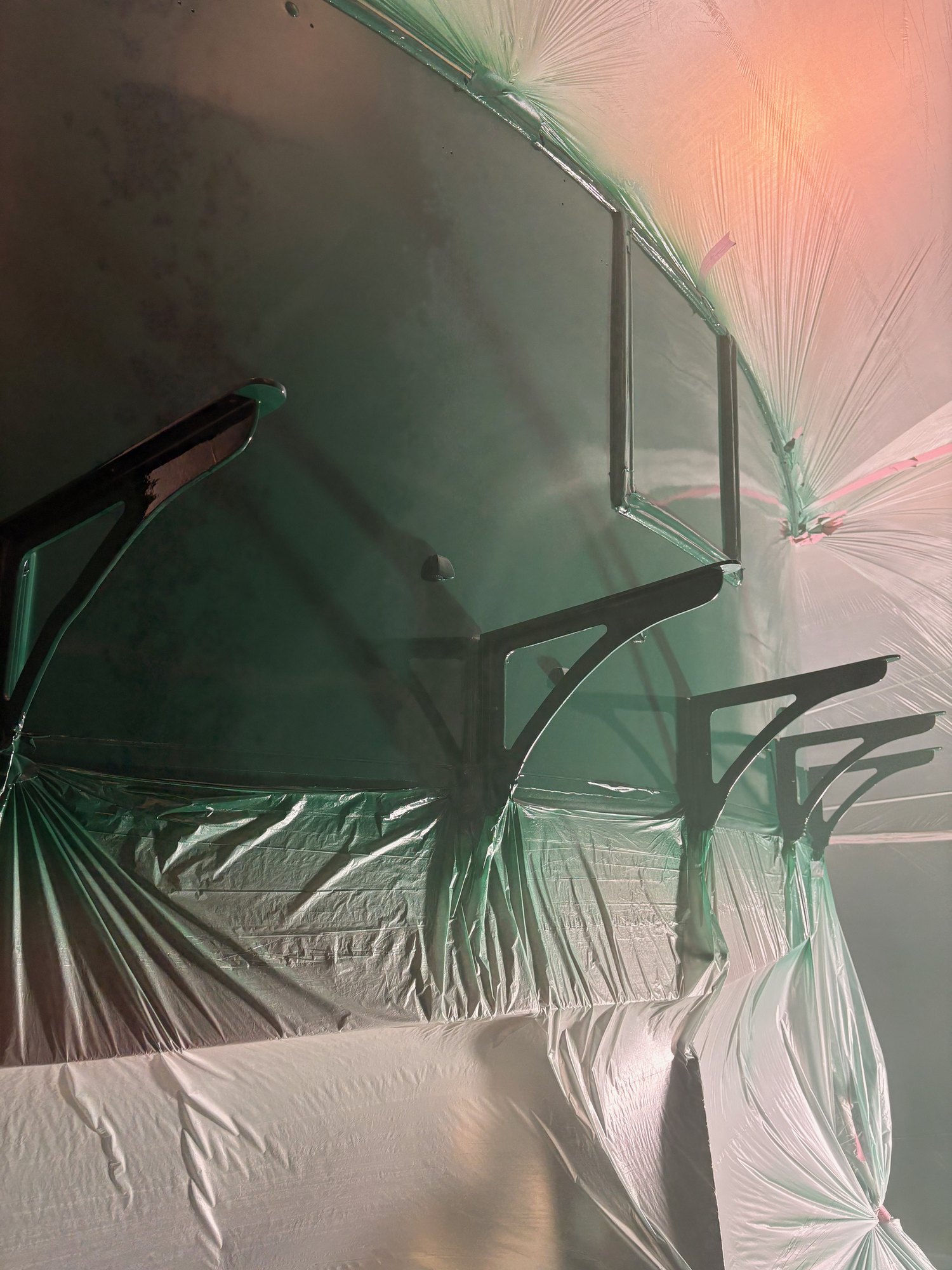
Indoors, under containment, with the boot stripe masked and the weather kept out of it. The finish that leaves the shop is the finish you still have in five years.
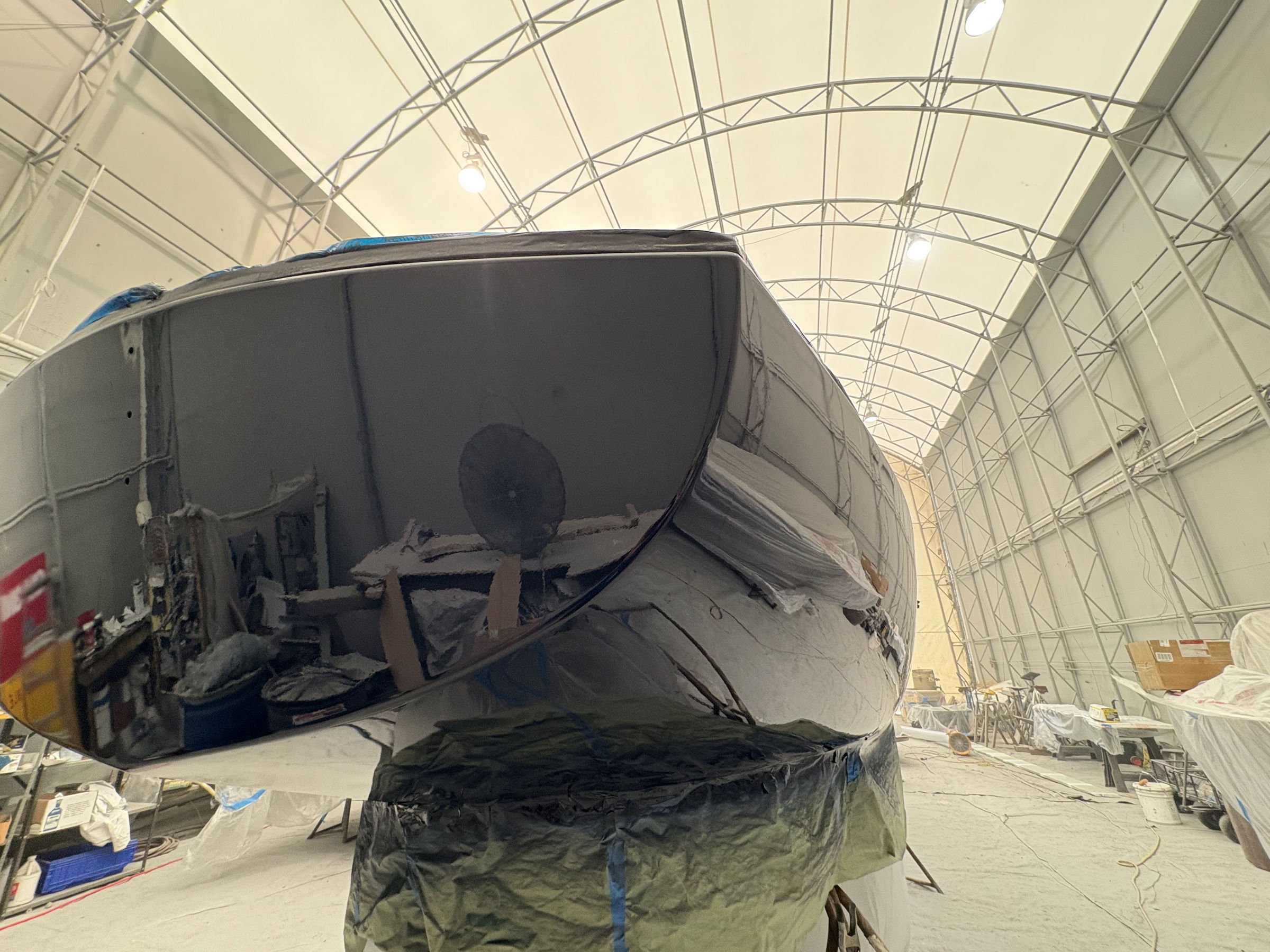
Faired and in primer
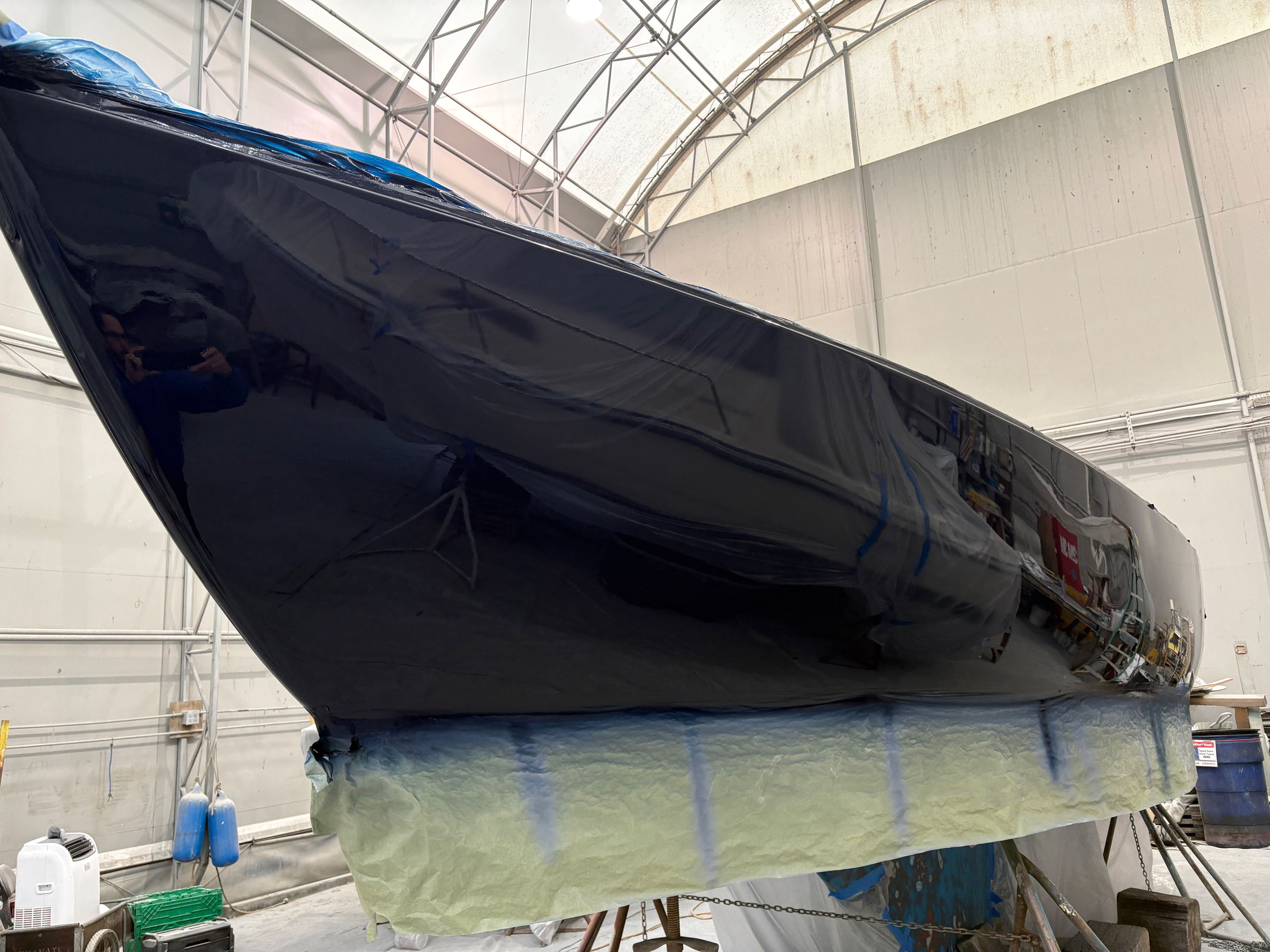
Sprayed and cut in
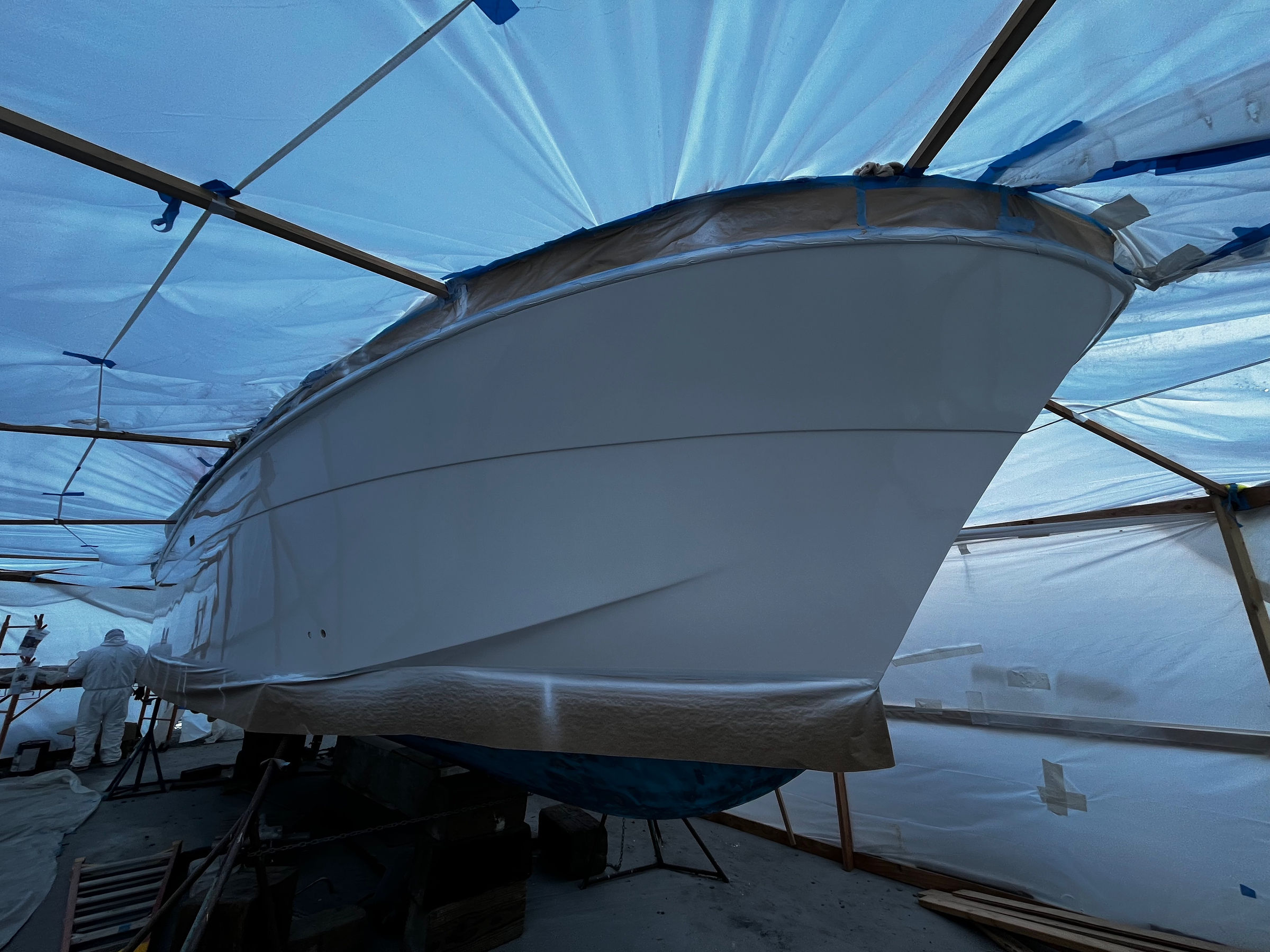
Full containment around the hull
No paint involved
This Rossiter was never repainted
That is the original gelcoat — cut, polished and sealed with GlideCoat Pro. And black is the least forgiving color there is: every swirl, every sanding mark and every flat spot shows. If your gelcoat is still sound, this is what it can be brought back to, for a fraction of what a respray costs.
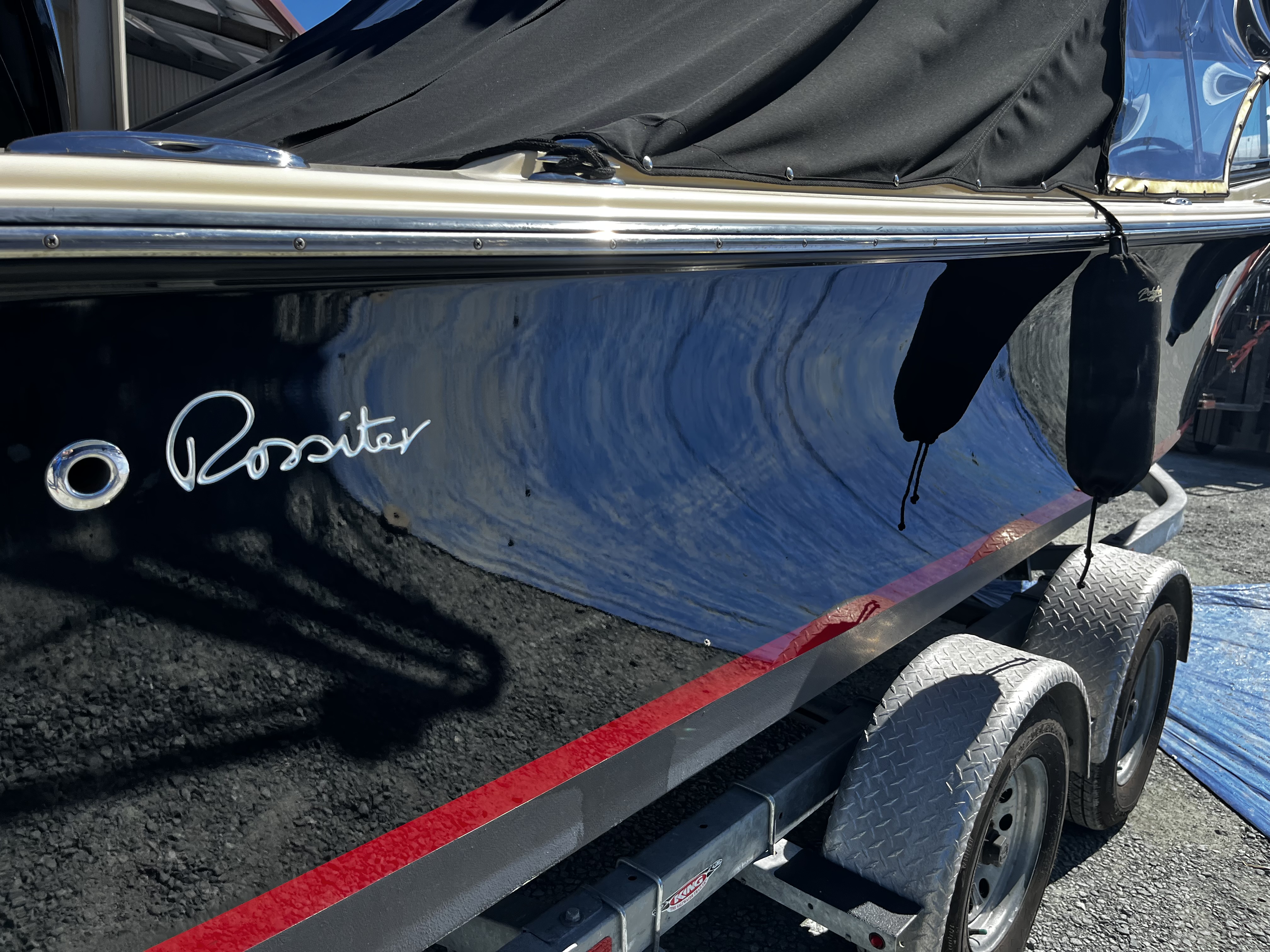
Original gelcoat, cut and sealed — not paint
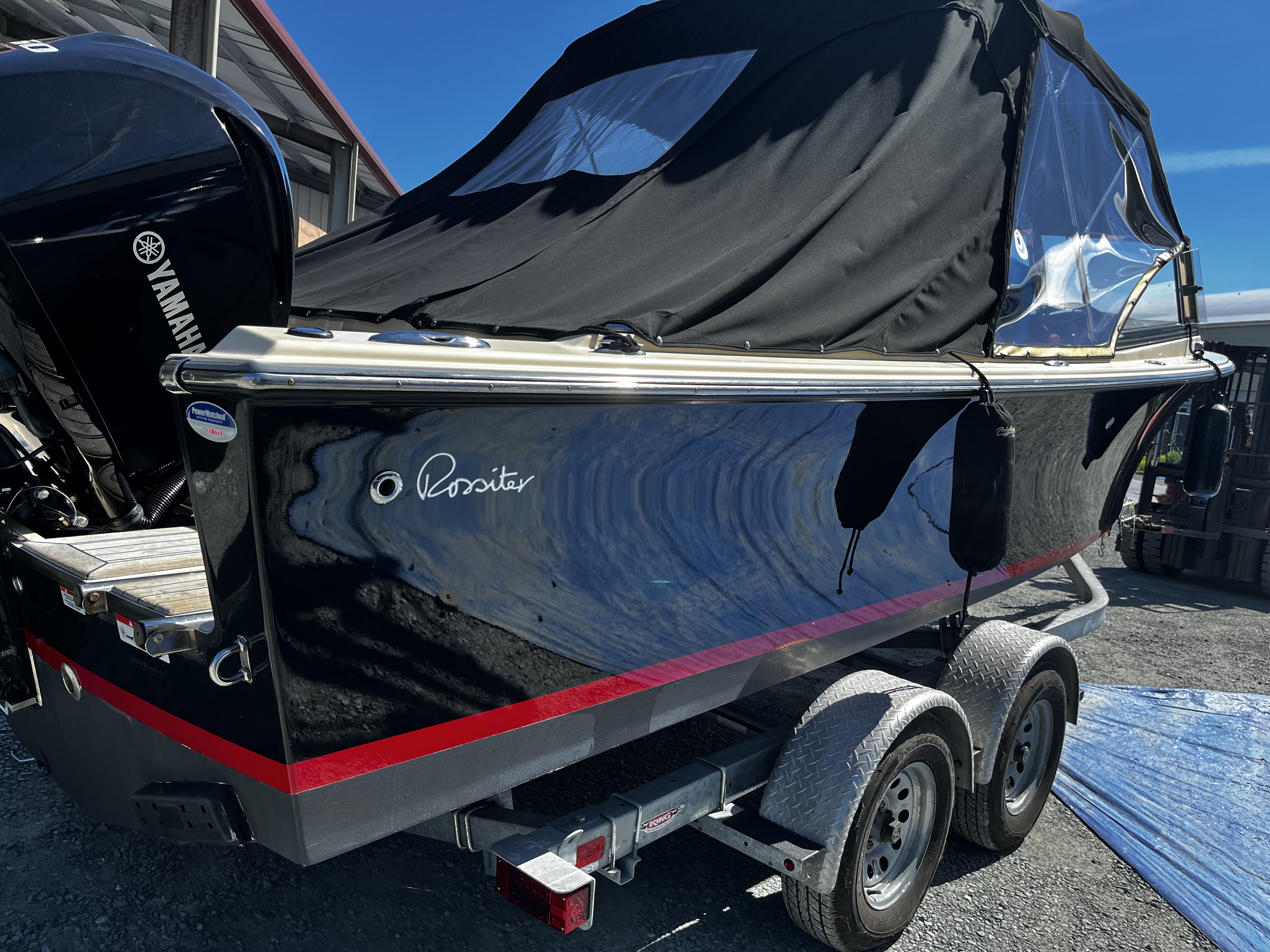
Black shows everything, which is the point
Sound gelcoat gets coated. Chalked, crazed or previously painted topsides get sprayed. We will tell you which one your boat is, and either way it leaves looking better than it has in years.
Quoted, every time
What moves the number
Two boats of the same length can be a long way apart on price, and the difference is almost never the paint. This is what we are looking at when we quote, so you can read ours and anyone else’s with the same eye.
- How much fairing the hull needs. The largest single variable, and the one you cannot see from the dock.
- What comes off first. Sound existing paint is a different job from a system that has to come back to substrate.
- The finish. Awlgrip, Awlcraft 2000, or cut and seal on sound gelcoat.
- How much of the boat. Hull only, or decks, nonskid, brightwork, spars, boot stripe and cove.
- Hardware. What has to come off, and what has to be masked around.
We quote from the boat, not from the phone.
Call us today
Tell us the make, the length and what it has on it now, and let’s get you a hard estimate on the timing and completion of your project within 48 hours.
Having the bottom done while the boat is out? Instant estimate.
Free for every customer
A complimentary 18-point inspection
An expert technician tests the boat’s systems and writes up every point as Excellent, Good, Monitor, Attention or Critical — a written report telling you what is sound, what to keep an eye on, and what has to be dealt with before it goes back in the water. Free with every job.
EXCELLENT
GOOD
MONITOR
ATTENTION
CRITICAL

